

Susannah Aziz is a former teacher, freelance writer, and third-generation Palestinian-American Muslim. Through reading to her own children, Aziz felt humor was missing in the majority of traditional Islamic children's literature. So she picked up a pen one day. And she wrote. Fun, silly stories. Susannah aims to depict the lives of average Muslim children in her work: fun-loving, enthusiastic, and delightful children. Aziz is an advocate and fundraiser for the UNRWA-the United Nations Relief and Works Agency for Palestine Refugees in the Near East-which strives to provide support for the psychosocial health of refugee children living in the Gaza Strip. Aziz currently resides in Staten Island with her husband, three children, and her mischievous orange tabby cat, Chickpea.
Books by Susannah
Included in USA Today’s 12 books for kids to read during Ramadan!
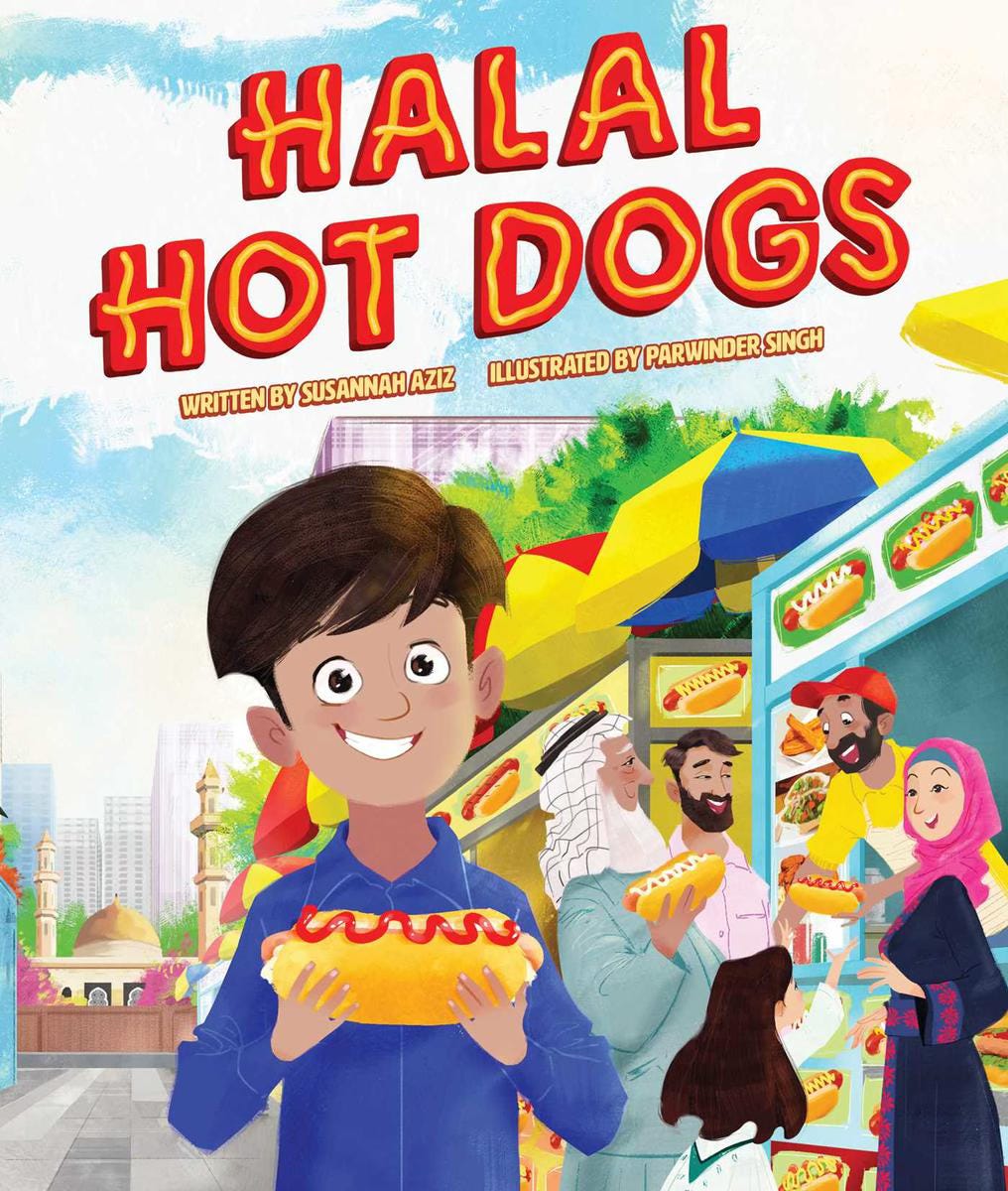
"Musa's enthusiasm for halal hot dogs is infectious, and this portrait of a family and community that takes joy and pride in their identity and traditions is refreshing . . . . A joyful celebration of street food and Muslim American culture."--Kirkus Reviews
"An enjoyable tour of food, faith, and family."--School Library Journal
Gr 2-4-It’s Friday, Musa’s favorite day of the week-the day his family, including his mother, father, siblings, and grandfather walk together to attend Jummah prayer service at a local masjid and have a special meal together afterward. After weeks of waiting and enduring some food mishaps, it’s finally Musa’s turn to choose the family’s post-Jummah treat. He knows exactly what he wants: halal hot dogs from a stand near the masjid, topped with Salam sauce, of course. This lively tale chronicles Musa’s Friday adventure through the streets of his vibrant urban neighborhood. Bright cartoon illustrations contribute to the feel of the story. While the family’s ethnic identity isn’t explicitly identified, references to dishes such as molokhia and kefte, and mentions of cultural traditions (debke, a folk dance popular in Palestinian and Lebanese communities), as well as depictions of family members wearing traditional dress, offer an unabashed representation of a loving and positive Middle Eastern family. Community members at the masjid and in the neighborhood are depicted in various skin tones, shapes, and sizes, with names representing diverse ethnic backgrounds. A glossary of Arabic words and terms and an explanation of halal laws provide additional context. VERDICT An enjoyable tour of food, faith, and family.-School Library Journal